

 RSS Feed

 Spotify

 Amazon Music

 Apple Podcasts

 iHeartRadio

 RadioPublic

 TuneIn

 Castbox

 PocketCasts

 Overcast

 Castro

 YouTube

 Deezer

 Audible
The Open AI Whistleblower: What Really Happened to Suchir Balaji?
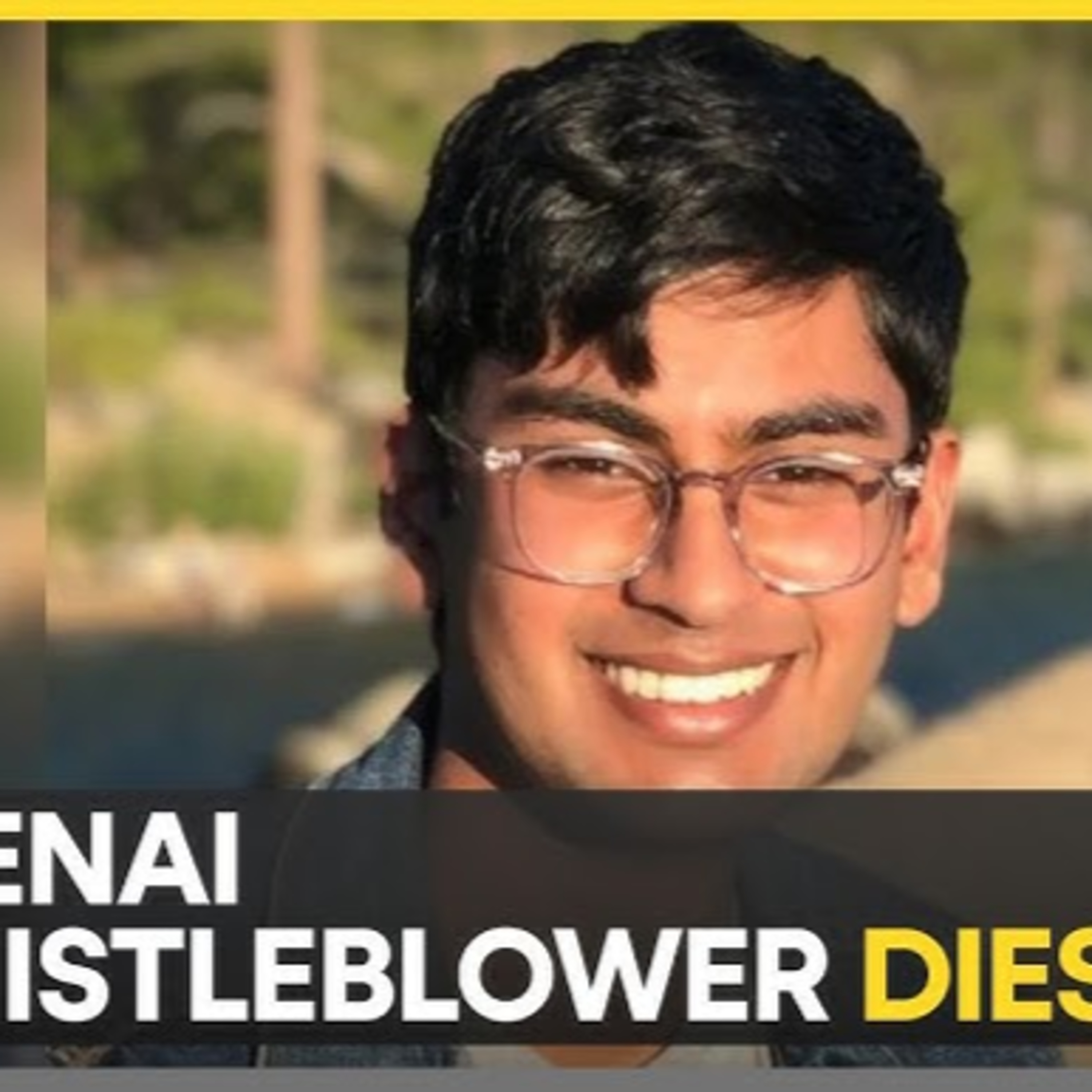
A young OpenAI engineer sounded the alarm about AI’s hidden dangers… then died under disputed circumstances. Missing footage, unusual toxicology, unanswered questions — and a story Silicon Valley would prefer to forget.
In this episode, we uncover the warnings he tried to give, the pressure he was under, and the mysteries surrounding his final days.
This is the story of the whistleblower who challenged the machine.
Keywords: AI whistleblower, tech mystery, OpenAI, generative AI controversy, unexplained death.
0:00 Hello, bizarre story friends. If you're tuned in now, you are listening to The Bizarre AF, a place where we talk about the strange, the unusual, the unknown, and all things bizarre AFI am Alicia, your Hostess for today's episode, and as always, we ask that you keep an open mind. Keep a skeptical ear, but keep on listening to those facts as we take you on our newest journey, The Open AI Whistleblower. What really happened to SU Chair Balgi? Well, hello darling, how are you doing today? Hey Bubba, I'm doing great.
1:06 What's new in your life? God, a lot. And by a lot, I mean, I have absolutely no idea. You know, sometimes I just feel like I'm wandering through the world, just clueless. Waiting for an alien invasion? Oh my God. Please, I am please. Please. I mean, I'm definitely not, but the more and more time goes by, the more and more I'm like, could it really be any weirder? Could it really be any worse? Could it be? Would I hate it that much? Could it be better? Could it be in fact be better? Yeah, I think, I think that is that is the name of the game. And on top of that, you know, it's just like the holidays, you know? You know, things are crazy busy and we're, you know, going from one feast to another, rolling down the fucking road. Do you feel like that?
1:54 Yeah, Yeah. Yeah, although as I think as I get older, I feel like I'm doing less of that and just being more like I say Hermity because that sounds awful, but more just kind of cozy at home kind of tangent, right? Tangent. So, you know, today I actually wanted to talk about whistleblowers and we actually talk. About Thing more and more, yeah. Yeah, it's become more and more and we actually talk about whistleblowers all the time on this, on this podcast. It's been, it's been steadily that we've increased it, right. And ultimately, like, they're essential to run an effective democracy, and they really do play a pivotal role in ensuring that absolute power does not corrupt absolutely, right?
2:36 Exactly. So today we are talking about a whistleblower, not in the alien space, which is typically where where this would come from, but in the artificial intelligence space. This story is about Suchir Balji and he was a 26 year old engineer who actually worked inside of open AI. He helped. ChatGPT that we all use today. Yes, exactly. He helped build the systems behind ChatGPT, and then he publicly questioned whether or not the company's practices were even legal. Interesting. Legal. OK. All right. Yeah, whether they're they're, whether or not they're. Illegal. OK. And weeks later, he was gone. What do you mean like gone from that planet?
3:18 Oh, no. So this episode is not about sensationalism. I just wanted to make that clear. It's really about tracing the facts and understanding what he actually said and exploring, you know, the ethical fault lines that he revealed in one of the world's most powerful companies. Fascinating. You can't wait, OK? So suit your Balgi, he was the kind of, you know, person that silicone and valley like wet dreams about. Of course, 1998, raised in Florida and then moves to Cupertino, CA with his parents who are also, you know, in IT. But he actually builds his first computer at 13 and ends up winning the programming Olympics essentially by high school. So it's the the programming Olympic odds. Have you heard of those?
4:05 Sure. OK, yes, yes, yes, yes. They get all the nerds together and they build great stuff. Not to go off on tangent, but the software that I develop on, they have these hackathons, yeah. So same kind of thing. You get them all together, you can see who can build shit. He built his first computer at 13 and he was winning by high school. These are these are like cash prizes. Often it's like $100,000. He ends up winning in fucking high school. He ends up studying computer science at Berkeley and then eventually joins Open AI. He works there between 2020 and 2024 and this information is found on his website. So you know once again, not conjecture. You know he wasn't a public figure, but people inside of the company of of open AI knew he was amazing. He was like a prodigy at his job. He was really good at what he did. John Shulman, who which is what was one of the open AI Co founders.
5:01 He later said that Balji's contributions were essential and it wouldn't have succeeded without him. He helped gather and organize a huge data sets. It was really the raw material behind open AI which was used to train the large language models like like the GPT 3 and GPT 4. So, you know, if you don't use ChatGPT and you live under a rock, there have been multiple iterations of ChatGPT. Right, Get it better every time. The language model just gets better and better and better, because why? It learns from itself. That's right, more data is putting in it's continue, it's continuing learning. So, so he was the one who originally was like helping, you know, gather all this data and training ultimately that these models. And this is really important because the same thing that he helped build is what he later is questioning. Right.
5:56 We kind of hear that with smart scientists all the time. Like, they build something and then they question like, uh oh, was this a good idea? Yeah. But quite honestly, if they wouldn't have built it, somebody else would have anyway. So, you know, they can't blame themselves. But yeah, you see that all the time. Or then the government will get a hold of it and go, you know, people like we say, God, let's take us like broken records. People use things for nefarious reasons. Good things for nefarious reasons, yes. Right, You can use things for evil and then for good, and there are an awful lot of people who want to use it for nefarious reasons. Especially to get money. And money is yes, and we will be talking about that. You don't say.
6:40 So Speaking of opening, I did begin as a non profit and they said that they it's to benefit all of humanity. Sure, it seems like that's what it would be. Yeah, that kind of a place, right? The tool that all of us use on a daily basis. I mean, I do, I can, I can say that I do. It was initially A nonprofit meant to improve humankind. But by the time that Suture Balgi had joined, the structure of the company had already split. So there was now a nonprofit parent for profit arm and then a capped profit entity that controlled both aspects of Chachi PT. A profit controlling a non profit? Yeah, that sounds like a conflict. Yeah, it does.
7:25 Yeah. So you know, Kevin, have you actually been in a situation where you joined a company and everything that they say that they stand for, like you're interviewing, you're like, Oh my God, yeah, this is great. This is like we're on the same page and then as you get there, the reality of the company is different, questionable. I have experienced that. Yeah, and what was it like? Like when you discovered? Oh my God. It's heartbreaking, it's disappointing. You feel like betrayed, I guess, almost like it's terrible. It's absolutely terrible. And as I've learned, as I've gotten older and in my career, I was like a workaholic, like if I work for somebody, like I was Leon loyal.
8:11 Yeah. Like excessively loyal. And then as I've grown older, I've realized they're not loyal to you. They are. There has no loyalty as much as they tell you how important you are and I'll no, yeah, no. And so then when you get to the extreme of like, you know, finding out that they are not even close to what they represent, then that's even worse. Oh my God, yeah, it is the worst. It you're like, I was sold this one dream and then yes, it's not what the reality is, right? That is something that I I joke around with people in general. We're not saving babies. This is not brain surgery. This is not like life or death. Like, let's get with the freaking programs. You know, we're here for a paycheck. But Balji had actually told The Associated Press that it did not sit right with him that the company was training on the creative work of millions of people. And then he they were releasing products that actually compete with those people in the same marketplace. OK.
9:13 That's what he was having a problem with. I'm sorry, hindsight's 2020, but what did he expect was going to happen? He was young and he's like, oh, this will be so great. I'm getting all the data. Yes, I mean where? Did he think he was getting the data from exactly? Yeah. Yeah, naive, naive attack. 20, He was in his mid 20s. Yeah. You know, he had not learned about the fucking world yet, right? So, you know, the more and more he, he actually sees this company pivot further towards commercialization, right? Licensing deals, aggressive product rollouts and partnerships that were really meant to scale quickly, like they were trying to develop these iterations of Chachi PT as fast as possible. Now here's really what's striking and his fair use essay. He publishes an essay which we'll talk a little bit more about.
10:03 He does not rant or rage about open AI ChatGPT. He actually methodically points out that the commercial nature of these products weighs against a fair use defense under the US law. So in other words, the more open AI moves towards profit, the more legal and ethical friction he saw. Like you can't do both at the same time. You can't move towards like commercialization and then also be ethical. Like there is no way we're not gathering this data in ways that are responsible. No, because you have you're doing things for profit, yes. Yes, yeah.
10:45 And what you are trying to sell a product? Exactly. By any means necessary. Right. Which is a problem, right? So it's what, you know, essentially, it's one thing to build tools meant to benefit humanity. It's a totally different thing to watch the organization reorient around capital, partnerships, valuation, speed, you know, money. He joined this. He's this guy could have gotten a job fucking anywhere. He could have gotten a job anywhere and he chose to work at open AI because of their ethical stances and the fact that this was a non profit. So he they they bring him in, use his like skill set. To build a life altering.
11:27 Product or to build in a life altering product that he was pivotal in I mean the Co the Co founder said that yeah and Oh yeah, we're totally going to be doing it good. It's just for like humanity's benefit and then. What? Happened then they're like, we need to make money. Money. So by October 2024, I had talked about his essay. Balji had published something unusual for an engineer at that time still working in the industry to do. He publishes that highly technical, deeply critical essay titled When does Generative AI Qualify for Fair Use?
12:10 And he did not mince words in this article. OK, the essay goes, actually argues that the way generative AI systems train on Internet data, including copyrighted work, may not actually pass the fair use, the US fair use test. So he broke down each one of the four legal factors from US Copyright Act one O 7, which is the purpose of character, purpose and character of the use, nature of the copyrighted work, amount used and the effect on the market. Now his claim was that AI models might fill several of those facts, especially the last one, because as he put it on, the outputs of these models compete with the original creators.
12:57 He actually even went further and warned that companies like Open AI were creating something that extracts from the Internet without giving anything back, and that this could damage the creative ecosystem long term. Yeah, so I'm processing all of this in my brain, which is why I'm I'm quiet. It's, it's this rock and a hard place thing in my mind because like any human being, you're going to know things that are copyrighted to help educate you to do something different, which is no different than a large language model, but to the point of the quantity, I guess, and the quality.
13:38 And that is where humans would do it differently than AI would. Or it is. AI, you know, doesn't have any scruples about the bullshit out there. Like, which I would say, and actually that's not necessarily true because you and I, before the podcast even started, talked about like people who are just there for power and like and stuff and don't care if they're lying. Like they, they clearly will lie just to incite, you know, folks and make them angry or whatever. Same kind of situation, right? AI that's, that's really the, the few or there are less people like humans who do that. The people who are creating like works of art and things like that.
14:19 They're not doing that to flood the market. They're just doing it because it's something that, you know, they love to do it and they're inspired and maybe they're hoping to inspire other people in some capacity. But this essay that he publishes, it's not just venting. He's not just venting about shit. He's not like these people are so mean and they don't like me. Like, I hate this company. It was a shot fired across the bow of one of the most powerful AI companies in the world. I would say still right. Yeah, you're calling. Yeah, you're, yeah, exactly. You're calling out kind of their bullshit like you're bringing to light what really the hypocrisy, The hypocrisy, that's the word I was looking for. Yes, yes, yeah.
15:03 And to a what I'm sure is a billion dollar market, that's not a good idea. No, no, it's not a good idea. They have power and money, right? And investors. And actually this came at a moment when the lawsuits about open AI were mounting. There were more. And he knew this. He knew that the lawsuits were were being stacked and from the inside. What does he do? He publishes an article on his page that gets picked up by the New York Times and is run against open AI. OK, The New York Times had republished like the article on his website and on it they're like really saying engineer accusing open AI for copyright infringement.
15:49 And like, of course, it's like a top story. Top one. If you want to understand why an insider might get uneasy, you have to kind of look at the company's relationship with its training data, right? How is Open AI training ChatGPT on data? A Ball G's essay includes a line that may make you feel a little uneasy. He writes that companies like Open AI have signed numerous data licensing agreements. And then he asks the question that most engineers might keep quiet about. If this is all for fair use, why pay for any licenses at all? Right.
16:32 Why are you paying for this? Why are you? Right, exactly. Ultimately, it it implies 2 things. One, the legal status of the training data actually might not be as clear as the company claims that it is. And then two some models may rely on licensed sets, while others quietly use unlicensed ones. Right, because who's to say that? I mean, it's on the Internet, whether it's licensed or not. You may say, yeah, I mean, who's to say that you couldn't just say, open the floodgates and go, just go wherever? Yeah. No, totally. Yeah, no, we're doing things.
17:15 We're we're doing things up and. Up. Yeah, yeah, it's totally fine. Yeah, No, like outside of the company, you know, transparency's an actual like, word that people use and actuate. But inside, there's a level of visibility that the employees may or may not have within. And they're actively training this this huge program. We also know that he actually helped collect and organize large Internet skilled data sets. So he saw the pipeline up close. He saw what was being fed to these. He helped arrange them. So imagine this, you are actually handling the data. You've watched the lawsuit stack up, you've seen this mix of licensed and unlicensed sources, and then you watch the company roll out product after product all saying, Oh yeah, no, no, we it's all up and up.
18:07 It's all up and up. We follow copyright law. It's totally fine. And someone who has like this really strong, like moral compass, it's going to create a huge tension like he's going to, he's going to struggle with that. He's going to struggle hard. And something has to give, right? There's something that really comes from tech engineers. He actually starts having a concern for the ecosystem that he is working within. And he isn't just worried about lawsuits. He was really worried about the Internet, the health of the Internet itself. Makes sense. Starts getting flooded with what we know as hallucinations, as an example. Exactly, and he's probably seeing this on a much larger scale before Chachi PT is even talking about before Open AI is fessing up to it. In his fair use essayist, he recites research showing that there was a 12% drop in Stack Overflow traffic after releases of powerful language models.
19:07 So what is Stack Overflow? That's the data that would be stack overflow. It's the. So a stack is a set of data. Overflow would be what what? What was it? The output? What would this? What would that be? Well, it's, it's basically what he's he's doing is able to track the information that's being like generated out of it. Yeah, out of it and within the Internet, right. So he's seeing that there's actually a drop. Once they have these models that are uploaded into the system that are that are updated, he sees that there's a drop in information being created, the traffic that's actually being. Weird. Yeah.
19:48 So he's like, no, this is actually not good. Right the. The data the the Internet itself is almost starting to to die. Like you're seeing a decrease in the information that is being creatively. Because people are trying to get it out of chat BT rather than it's like you said before, contributing into the Internet. Yeah, people are. Not there's nothing going back in yes. Exactly. Yeah, it's kind of fucked up. And he's now he's arguing that generative AI doesn't just use content, it can replace the need to visit the original source. So the traffic like the people like clicking on, yes, Wikipedia, whatever, like dictionary or like, or going to like these blogs and things like that. They're, they stop going to it.
20:35 They're just asking ChatGPT to like. How often have you asked ChatGPT for something and not even clicked on the link that it provides? Right, right. And going outside to that traffic. So like exactly you're not doing it, you're. Not doing it, no. So if you think about it like AI is pulling from artists, from writers, from researchers, coders, musicians, forum posters, Reddit, you know, sure, everyday contributors, yes. And it then reduces the traffic back to those communities. So it's literally draining the Internet from the people that create real value to it. It would almost be like, and this is an extreme example to help us, I think visualize this.
21:18 It'd be like if you didn't have ChatGPT today, like you said, you would go out and you'd find these sources. You would Google it and then go to your places that you know were giving you what you want. Imagine everyone stopped doing that and just ask chat BT it. It's like instead of having millions of people going to these sources, you have one person going to these sources. Yeah, ultimately. And that one person chat adding to that source, right. He's not contributing. Yeah, you're not contributing. You're not saying, you know, for instance, you're you like a a bar or something or like a restaurant. You're not. You're no longer saying like it or four stars or whatever. Rating it, right.
22:02 You're not rating it anymore. Excuse me? You're just going just reading it. Yeah. You're just, you're just reading it. Yeah. It's wild. OK. Yeah. It's really cause and effect and he seems to recognize this earlier than many 'cause he's. 'Cause he's a genius. Yeah, he's a genius that exploiting the Commons without giving back harms the system. So for a young engineer, he was raised on the idea that the Internet is for everyone, right? Of course. And watching it be strip mined for information gold that gain for profit sake would definitely be painful. Because in the beginning I was saying like, he's very naive, he was young, blah, blah, blah. I honestly, I think that he was just seeing something happen in real time and really started causing an alarm. Like this is actually a problem and we're not thinking about this being a problem.
22:56 So around the time that Balji left, Opening Eye was going through internal upheaval. There was board conflicts, leadership disputes, there were debates about safety protocols. And it was actually the same period of time when concerns about hallucinations, reliability and alignment were becoming more visible. They were not talking about this. They weren't talking about the fact that, like, ChatGPT will lie to you. ChatGPT has, quite honestly, people have have. It makes shit up. It makes shit up and and it has triggered psychosis in people because it will hallucinate. It will tell you in things that are tell. You something that are not real. Yeah, and then you'll start to believe it. And so people like it starts hallucinating. Hallucinating.
23:42 You know, when he was speaking publicly, he actually mentioned issues beyond the copyright. Not, not just copyright. He said that the pace of deployment is a problem they're just trying to get shit out of as quickly as possible. You can't. What is it like you can't, you have, you have three things to choose. It's like a time, energy and money, right? So if you shortchange one, the other two are going to suffer, right? Like so you don't have to. So the content of the models that they're pushing forward are going to start having real big issues. Because everything in the Internet is true. Yeah, that's. Exactly, exactly, exactly. We recently released the last episode that that I had a hosted on on our friend from time like history, The Time Traveller.
24:29 Right, exactly. It's gonna. That's it. No, it's gonna look. At that and think it's real exactly so you know he's saying that this pace of deployment's a problem he's saying that the pressure to release products quickly is a problem and that the risk of models generating false or harmful content is a huge problem It is and this was over a year ago and people were talking about the fact that or he was talking about the fact that like this is definitely happening and I know how much. You know how much has changed in the year. It's changed so much. Drastic, yeah. With technology specifically, I mean, it's moving so fast, so you can only imagine. That was a year ago.
25:11 You can only imagine. Oh, yeah, yeah. And he was seeing all of the data and the information that was being put into it. And now he's being trained. Really, engineers like him know that model failures are not they're not abstract. They're really baked into the training choices, the data quality, the evaluation shortcuts that they're making. And let's honestly be real, these fast moving companies we were talking about, they're going to sacrifice something just to move forward quickly. Oh, I don't know if it was pressure, internal culture or the sense of the company's like move fast, scale, big classic fucking, you know, computer or like a startup mentality. But that mentality was outpacing its safety work.
25:53 And from his public comments, we can infer that he believed that there would be harm not just from copyright issues, but from the very speed and scope Open AI was starting to release. And that can be intoxicating, right? Like by the people who are in charge, but when you're the engineer who is seeing all the fucking issues and problems and errors. They feel responsible. Yes, you feel responsible and no one's listening to you. Only weeks after his essay. It was released in October and on November 18th, 2024, his name was appearing in legal findings and he was actually listed as a potential witness.
26:39 Sure. Someone who might have unique and relative documents. That's what it was. Yeah. Yeah. In these legal. Retro. Retro's right. So he may have had unique and relevant documents for several copyright related lawsuits against open AI. His parents were had later told the Guardian that he said he wanted to testify in the strongest fair use cases. So he's like, yeah, I'll definitely testify. If I mean do it like let's do it. Yeah, let's do the ones that like. Yeah, matter. This is really where his tensions start showing. You have former employee, a technical insider and a person who is directly handling the training data.
27:20 He's publicly challenging the legal foundation of the company's business model and offering to cooperate in lawsuits. And that's not it to. The chagrin. Yes, to the chagrin. The power people. Money, people. Yeah, yeah. It's not a small thing, right? It's. Textbook definition of a whistleblower, right? He never used that word, by the way, but just enough. He never said that, but it is that's exactly what he is. So around that time, you know, open AI, like all these lawsuits are coming up, right? Open AI is facing increasing scrutiny over what the clarity around their training data, concerns about their safety and their alignment. Who are they? Like, what are what are they trying to do?
28:02 Are you being paid by other companies to put their search? Like what is happening here? There are leadership disputes and there's massive legal battles with writers, publishers and other creators. And Baoji's critique was that training data may not qualify as fair use. It really struck at the core of their technology. So if the courts were to rule that training is not fair, use generative AIS as we know. Would be go away, yes. Yeah, they would have to shut it down or rebuild it or something. Exactly. That's not going to happen. No, no, not in their eyes. So when an engineer steps forward and is like, I don't think this is legal.
28:45 Uh huh. That's a threat. Yeah. It's a threat to opening. Up sure is. I was talking about how his article was released on the New York Times. He's getting involved in all of these like legal battle, and he's getting called as a witness in the strong ones. He's speaking out now. We're talking about November 18th. This was just a year ago. This is just a year ago only, you know, Weeks after his essay had come out, November 18th, he's listed in legal documents as being a person of interest, to be a witness. He's like, yeah, I'm happy to do it. I'm having these issues. He's having he's, you know, meeting with, like, reporters, things like that, like legal folks. On November 26th, 2024, Balji was found dead in his San Francisco apartment and the San Francisco Medical Examiner ruled his death a suicide.
29:39 Oh my God, here we go again. Right from the report, I'll go through the report and we'll talk about the different sides of it, OK, It's let's just say it's interesting timing, right? To say the least. To say the least. So the report actually noted that his apartment door was dead bolted from the inside, he had legally purchased a firearm, and on his toxicology report it showed that he had consumed GHB and alcohol. OK. OK, yes, he's scared. Yeah, sure. But his parents are strongly disputing this filing. He was very close with his parents. They actually argued that the evidence was mishandled and that footage from the apartment building is missing.
30:24 OK. Really. Yeah. Exactly. How many times? How many times? How many times does have to happen? So in September 2025, they actually filed A lawsuit against the building's management, alleging obstruction and tampering evidence. Clear. Clearly. So here's the key thing, like no matter which interpretation when you like, you see in his death, it does not change the substance of what he said while he was alive, right? Right. So he didn't publish leaks, you know, his whistleblowing. No, he didn't publish leaks. He didn't expose internal chat logs or confidential documents. Exactly. But what he did do was a little bit more dangerous.
31:04 He applied the law calmly, technically, publicly, to the place that he used to work. Which makes it more difficult to dispute. Right. Yeah, he's, he is asking if the foundation of generative AI, is it built on something that might not hold up in court, The fucking foundation of it. He's not saying these people are mean. He's like, no, everything that this stands for, this is not legal. And so if they were found that they literally would have to flip the switch. Right. Exactly, exactly. They'd have to flip the switch, then everything like then this money making scheme that they have, everything's up in question.
31:45 They're not going to be able to make the money and like to have the power that they currently have, right? This essay did not disappear after his death. It really became more relevant as all of these additional lawsuits start popping up and it really raises the questions that everyone in tech, law and creative fields should be asking about any kind of AI artificial intelligence. Can companies scrape the entire Internet to build a billion dollar like AI model? Do copyright laws apply to machines that learn from human work? And if AI can output something that competes with the original creator that is not that is fair use.
32:25 Is that stealing? Well, I, I, I know I, I mean, I have my opinions, but I mean, it can be argued either way. I guess I could say you could argue this case either way. Yeah, and I don't think we necessarily have the answers yet, but he really did force this conversation. Yes, exactly. He's like, is this ethical? I right. You know, I'm having fucking questions and, like, doubts, and no one's listening to me, so I'm just going to publish it. And the only way I know how calmly and methodically. Yeah. data-driven, dude. Yeah. So when the San Francisco medical Examiner ruled his death a suicide, the public, of course, makes sense, you know. Because he was so distraught over the whole thing. I mean, why would he do it?
33:10 Yeah, and why? Did it? Why did that make sense? Yeah, I, I mean, nobody, nobody really. This was like weeks after he had released this. And, you know, it's just easier to kind of shove it underneath the rug rather than saying, oh, hey, this app that I use all the time, maybe the people who are running it are evil and are trying to make people disappear, right? His parents did not accept this well. Of course not. Yeah. And their doubts were not rooted in denial or conspiracy. They were rooted in specific inconsistencies that would trouble any reasonable person, especially when it involves the death of a young person and a young whistleblower who was standing at the edge of a legal firestorm. It makes.
33:55 Yeah, It doesn't make it. There's no way. No. Now I wanted to talk about why they didn't accept his, the official story and why their questions still do matter. OK, so this missing surveillance footage, he lived in a secure building, a nice building with cameras. And his parents were asked to review the footage. They actually reportedly were told that it was missing, inaccessible, or simply not available for the window around his death. It's exhausting. For a tragedy, you know, this is that this is significant, right? This is not just a small glitch. You know, it's it's obvious. Yeah.
34:36 Yeah. Surveillance isn't proof of a crime. We're not saying that like, you know, right, proof of a crime, but it is one of the biggest reasons that the family is questioning the official rulings. Why did this information? Why was this deleted? Exactly that does. No, no, absolutely not. It does not make any sense, no. The other issue that they have is that the angle and the nature of the gun gunshot wound is really in question. His parents say that the trajectory and the placement of the wound didn't match what they expected of a self-inflicted shot. OK, they're not, you know, forensic experts, but they are parents.
35:17 And when the physical details don't match the story that you're being told, alarm bells go off. Of course, Right, Right. Once again, not, you know, we don't have proof of foul play, but this is a legitimate like question and something that you should be doubting. Now, here's another thing. The presence of GHB in his system. So the autopsy noted that there was GHB which is tied to two different, very different worlds, right? Recreational nightlife and incapacitation, right? Because GHB is in what like. Well, it's a substance that you can actually take and like people will use it. It's not something that a doctor could prescribe, but it's like it's used.
36:00 It's like a drug that you take and like, it makes you more docile. So his parents really questioned whether he would ever willingly take it and whether its presence contributed to vulnerability. So it really does complicate the simplicity of like a suicide narrative. Well, that in and of itself might not be. But when you add up, install the little pieces, then you start adding up, then it starts to become something. Yeah, yeah. It really like introduces this ambiguity, like, OK, you don't have any surveillance, OK. You know, he has GHB in his system. OK, there's a weird gunshot wound. Like, you know, the stuff just starts to add up.
36:42 The 4th 1 was like, you know, he didn't have signs of despair. He didn't have a history of of like suicidal thoughts. You know, his he was future focused. He's coming out talking about all these issues with an open AI. He was mentally stable. He was professionally engaged. He was like still releasing stuff on his website. He was in regular communication with his family, and he was actively preparing to testify in major copyright cases. So this is not like the classic behavioral shifts that happened before someone would commit suicide. This is it's questionable. And I do want to note that oftentimes suicides will come without warning, sure, but in a case with other inconsistencies.
37:28 That's exactly it. This becomes another pattern of like this shit is not adding up. Right. So the last thing that they bring up is this timing was too convenient, it was too coincidental, right? That's. The other thing exactly. You know he died less than two weeks after being named in court filings as someone who held unique and relevant documents. To shut something completely down. Yeah, related to open AI lawsuits related to these lawsuits and he dies 2 weeks later, no. No, I don't buy it. Don't buy it. No, no, I don't buy it either. And his parents actually talk about him expressing like, the stress and the unease around these legal implications of him speaking out so.
38:14 I'm sure he was upset, I'm sure he was scared. Yeah, he's 26 year old, years old. Exactly. I. Can't. I just can't buy the fact that he was so upset and distraught that he kills himself. I can't buy it. Yeah. Can't do it. Yeah. And I think that, like, even if nothing nefarious happened, all of these things, you know, are bothersome. But really for me, it's like the timing is the thing that is the biggest question. Exactly. So it's important to hear like, their thought process around here because like having missing evidence, like this missing evidence, that's not normal. It should never be normal.
38:57 Like they don't have like the surveillance he was living. It's not like he was living in like, you know, some shitty apartment complex. Exactly. He was living in a nice place that it puts into question the timelines of when he died, What, who was around? Was anyone around? You know, when this documentation is not complete, you know, we want clarity, we want to be able to connect the dots. So transparency, when we are connecting dots, it really does protect everyone. And you know, unfortunately, whistleblowers, people who speak out against these big organizations, governments, etcetera, they are often in this really uncomfortable position where they're trying to tell the truth and there are big powers that have an invested interest in them not getting the word out.
39:47 Exactly. You know, the scrutiny is not a conspiracy. It's really accountability. And the more powerful a company, a government, an institution is, the higher of a burden that we there is on investigators to rule things out and not rush them through, right? Of course, but power and money rule. Yes, yeah, they do. They always rule. And, you know, oftentimes when, like, tragedies like this happen, the families are the first ones to spot these inconsistencies. They're the first. Like, there are so many cases that we have heard about where people are saying that you said that this was a suicide.
40:29 I mean, come on. Look no further than Jeffrey Epstein. It does not make sense. His family literally hired an outside autopsy report, a coroner to do it because they were inconsistencies and their intuition is not evidence. I'm not saying that, but I am saying that it is information that we should be paying attention to. And the public really does have a stake in how whistleblower deaths are investigated. Yes, you know. Yes, because the more this happens, the less people will be wanting. If every time a whistleblower of something this high of stakes kills themselves, the less likely we will have whistleblowers. Yeah, yeah.
41:12 Which is their point, which is the intent. Exactly, exactly. It silences these people who have scruples, who have, like, a moral compass. It silences them. And then it creates these vacuums of power. It's a problem. Yeah. So even if, like, here's the thing, even if the ruling is correct, like, let's say, let's say he did, you know, commit suicide or whatever, they still deserve answers as to why these things are not making. Like, why is there missing footage? Why, Like, what is like, all this stuff, all this timing is really convenient. Why, why the toxicology? They're like, he's never been someone to do any kind of drugs, you know, and they deserve to have an investigation like done fully and not not have it be ruled suicide like automatically, you know, So I don't know.
42:05 I just think that, you know, his parents don't necessarily have the right to be justified, but, you know, their questions do matter. And the evidence around their son's death was not clean or simple or complete. And there are gaps in this information. It's for me, it's black and white and I don't, I'm not, I'm never one to really just be. I'm not a judgey person at all. And I and I always, I am about facts. But this to me seems so obvious, just because like if it wasn't chat, if it was something else maybe.
42:47 But this is so big. I mean this, this is the biggest alteration of humanity since I don't know, maybe the wheel, I don't know, a car of a telephone, I don't know. But it's life altering. This is totally a life altering. So for something to be involved, it's that big, tells you it's that the money is that equivalent and people will do anything to not lose the money anything. Yeah, yes. It's, you know, when you have a brilliant person who ends up being a whistleblower die at a moment when he's, you know, there's legal, there are legal battles, there are questions that should be asked, and we may never know what the answer is. No, you know, I'm going to say we're not going to because no, the nobody the powerful people don't want will never let us know.
43:57 Right. Yeah. Because they have the control. They do, yeah. Yeah. And that's why I think it's important for us to make note and talk about these things that that are happening. Like if it gets brushed under the rug and we say, oh, it's just some guy who was depressed, whatever. We're not asking these questions. It's going to happen to more and more people. It's going to continue. You know, we're going to, for whatever reason, be naive and trust these, like organizations. And then the things that they're warning US against are inevitably happening. Right. Exactly. Inevitably. Yeah. Yeah, it always ends up coming out, these whistleblowers that come out and then all of a sudden like have a heart attack.
44:37 Yeah, yeah, that's not like the first example of this. Yeah, it's not, it's not the first, It's not even the 10th. It's not, you know, it's like, like you could name a fucking number and you could, you know, it's, there's so many of these that we need to like as humans who are just trying our hardest. It's important for us to to pay attention to this shit. Exactly and. Guess what folks like? I use chachi PT. I use like AI. I actually pay for it. Exactly, exactly. It's a problem, but it's a problem. And, you know, these companies are not to be trusted.
45:17 I've talked. We were just talking about it how like, you know, I'm getting away from Google and I'm trying to use other, you know, other text sources because you can't trust your data with anything. And like this guy was trying to say that he's like, all this data is being mined and you can't trust it. And, well, it's very interesting that he's not able to speak about it anymore. No good. Yeah, it's not good at all. No good. Pay attention, people. Pay attention. Don't. Trust, yeah, and don't just blow shit under the rug. We all need to stay vigilant. Yes, now more than ever, we are so much more. Than. Ever we're more connected, we have technology, we have sources like look at things, read things, read multiple sources.
46:02 Don't take the first source that you are listening to, you know, try to diversify the information that you're getting because yeah, it's clearly we're getting less information and it's becoming more and more narrow focus. So it's a problem. Damn. All right, we'll make sure and follow us on social media. Yes. Let us know what you guys want to hear. You can watch our episodes on our website, thatwasraf.com. You can actually watch them on Spotify too. Yeah. And just let us know what you guys think. Yes, yeah, leave a review like comments with grandma and shit. Yeah, yeah, yeah. Thank you guys for great. Yeah. Thank you so much. Yeah, we'll we'll see you soon. See you soon.
46:43 Bye.


